Small rooms are usually decorated as if their main problem were colour. Paint the walls white, add a mirror, choose light furniture, and the room will feel bigger. Sometimes that works. More often it produces a pale, busy space that still feels cramped, because the real constraints are proportion, sightlines and the amount of visual noise at eye level.
This guide treats a small room as a design problem rather than a decorating problem. The goal is not to pretend the room is large. It is to make it feel calm, efficient and generous in the ways that matter.
The short version
- Preserve the longest uninterrupted sightline. Do not put tall storage across it.
- Use low furniture to keep the upper half of the room open.
- Build storage into the architecture so it reads as wall, not as furniture.
- Choose a narrow palette and repeat it, rather than many light colours.
- Light the walls and ceiling, not just the floor. Bright surfaces read as space.
Start with the sightline
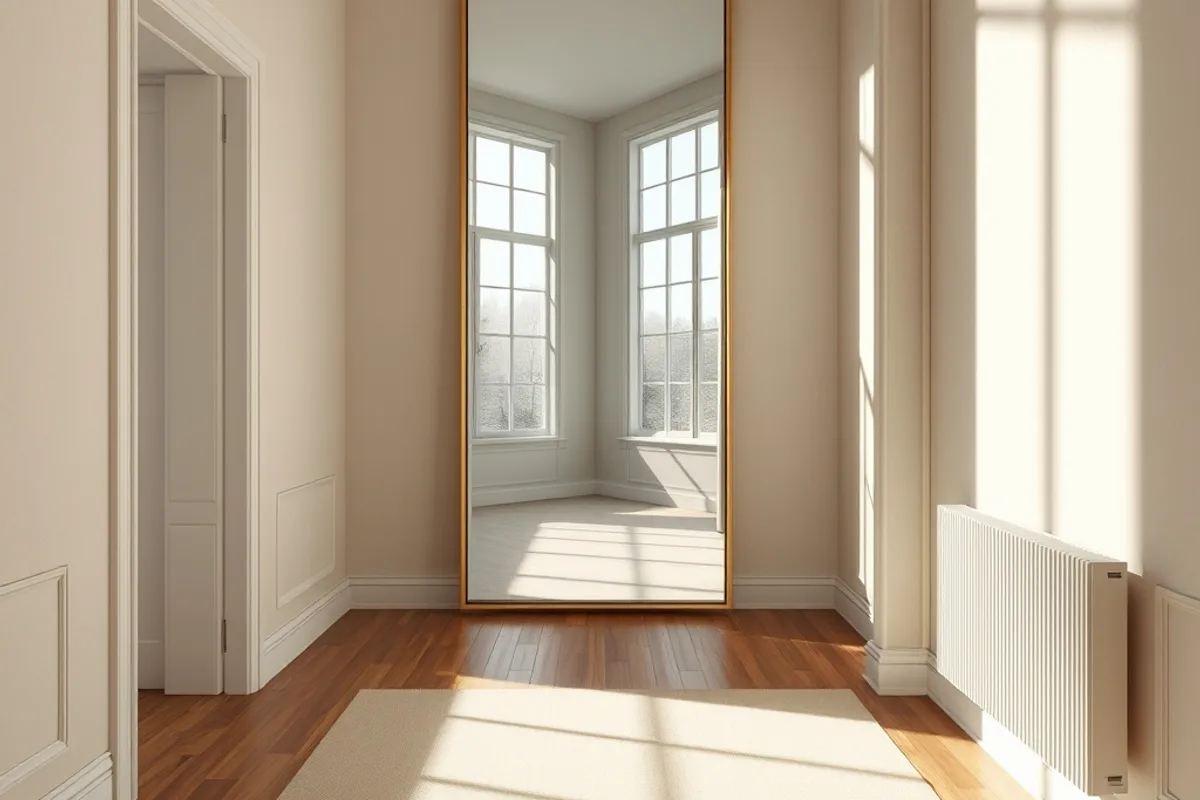
Walk into the room and identify the longest view. In most small rooms it runs from the door to the farthest window or wall. That line is the room's sense of depth. Anything placed across it, especially a tall wardrobe or a deep bookshelf, visually shortens the space.
Keep the sightline clear at eye level. Low furniture is fine. A sofa back, a dining table or a bed foot can sit within the view without blocking it. Tall storage belongs on the side walls or in alcoves, where it becomes part of the room's edge rather than an obstacle in the middle.
If the room has only one window, position the main seating or bed so the window is visible from the doorway. The eye reads the light source as distance, and the room feels deeper than its dimensions suggest.
Proportion is more powerful than colour
A small room with oversized furniture feels smaller, not cosier. A small room with furniture scaled to the architecture feels intentional. Measure the room and choose pieces that leave clear circulation space: at least 600 mm between the sofa and the coffee table, 700 mm for a main walkway, and enough room to open doors and drawers.
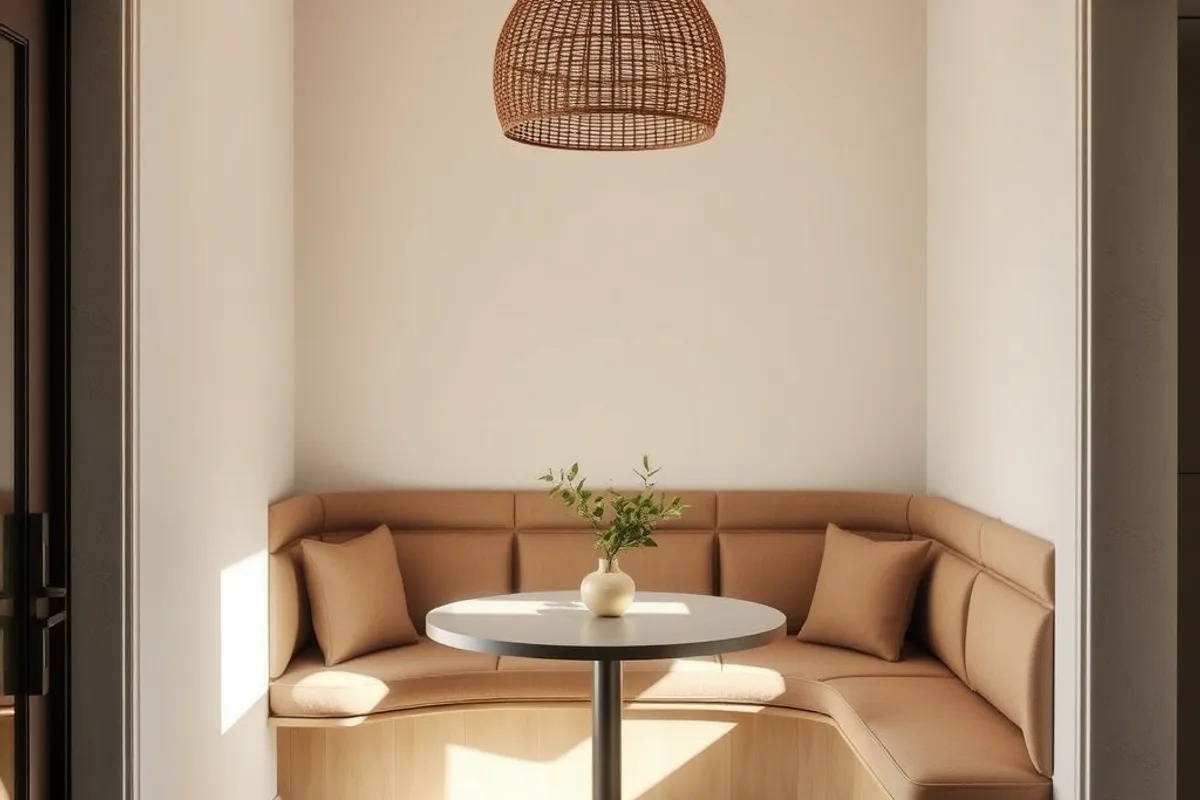
Height matters as much as footprint. A low sofa and a low bed keep the upper volume free. A tall, narrow bookcase uses vertical space without eating floor area. A pendant light hung close to the table defines the zone without adding clutter at the edges.
Rugs should be large enough to sit under the front legs of the furniture. A tiny rug in the middle of a small room makes the floor look patchy and the furniture look adrift. One generous rug reads as a single, calm surface.
Storage that disappears
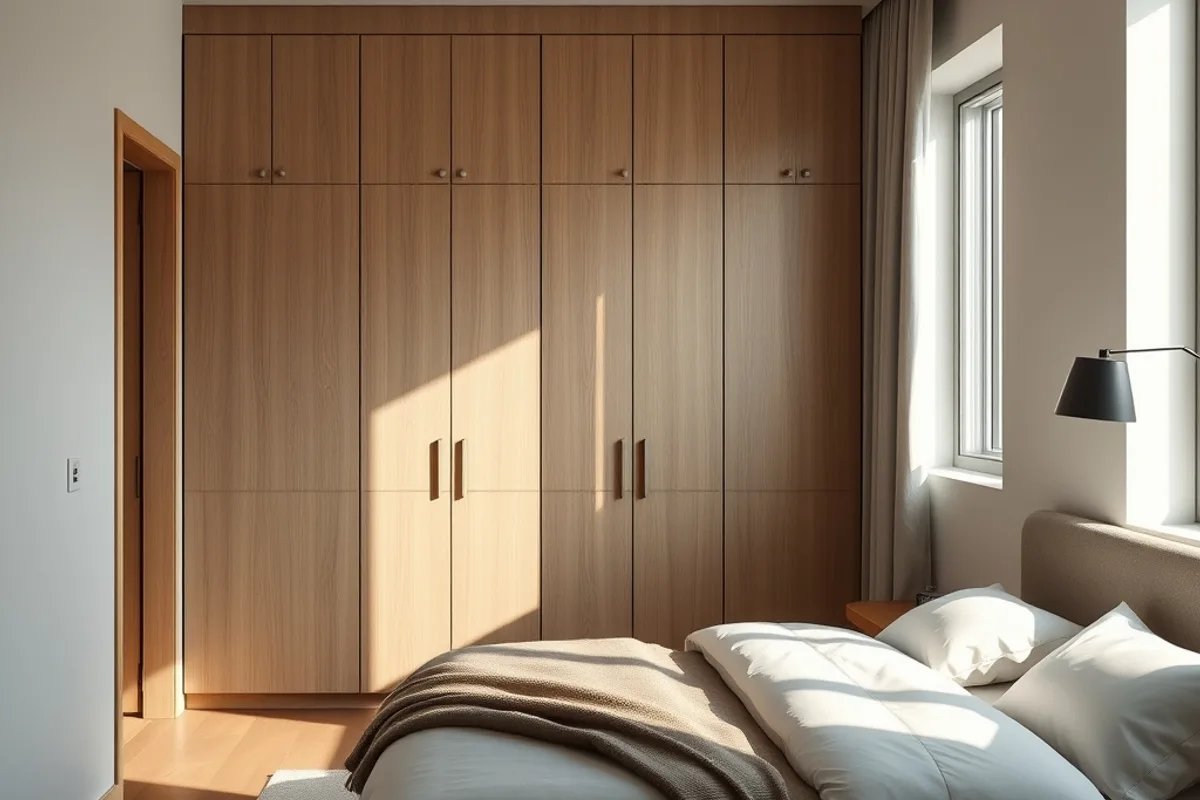
The most effective storage in a small room is the storage you cannot identify as storage. Floor-to-ceiling wardrobes painted the same colour as the walls, with simple push-latch doors, read as a solid wall. A window seat with drawers below uses the dead space under the sill. A bed with storage in the base replaces a chest of drawers.
Built-in storage costs more than freestanding furniture, but it usually earns the difference in a small room. It removes the gaps, dust traps and visual variety that make a space feel cluttered. The key is to keep the front face plain and the handles minimal.
Avoid open shelving unless you are disciplined about what goes on it. Open shelves are display, not storage. In a small room, every visible object competes for attention. Closed doors are a form of calm.
A small room does not need more things that fit. It needs fewer things that show.
Colour: narrow, not necessarily pale
The old advice to paint small rooms white assumes that light colours always expand space. In practice, a room with many pale tones and strong contrasts can feel busier than a room painted in one deeper colour. What matters is continuity.
Choose a narrow palette: two or three related tones, repeated across walls, woodwork, textiles and furniture. Painting the walls, ceiling and trim in the same colour blurs the edges of the room and makes the boundaries less obvious. This works especially well in bedrooms and studies, where a cocooning effect is welcome.
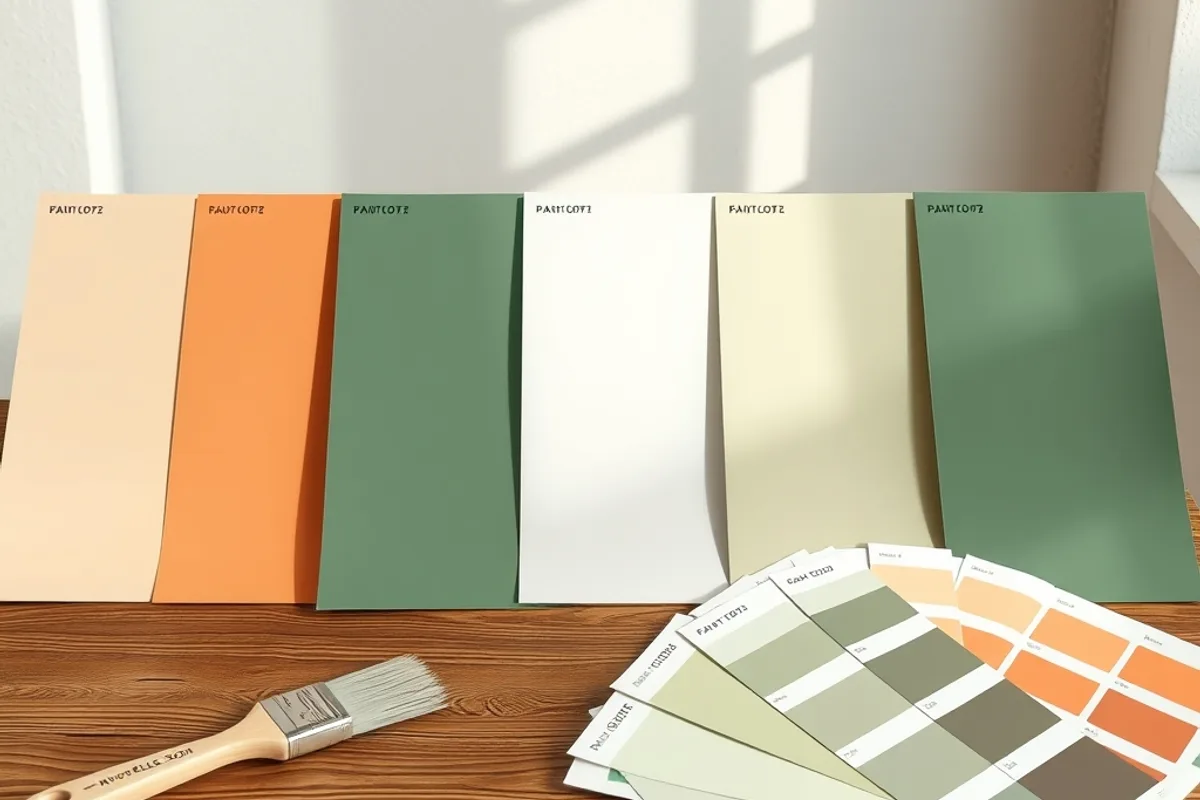
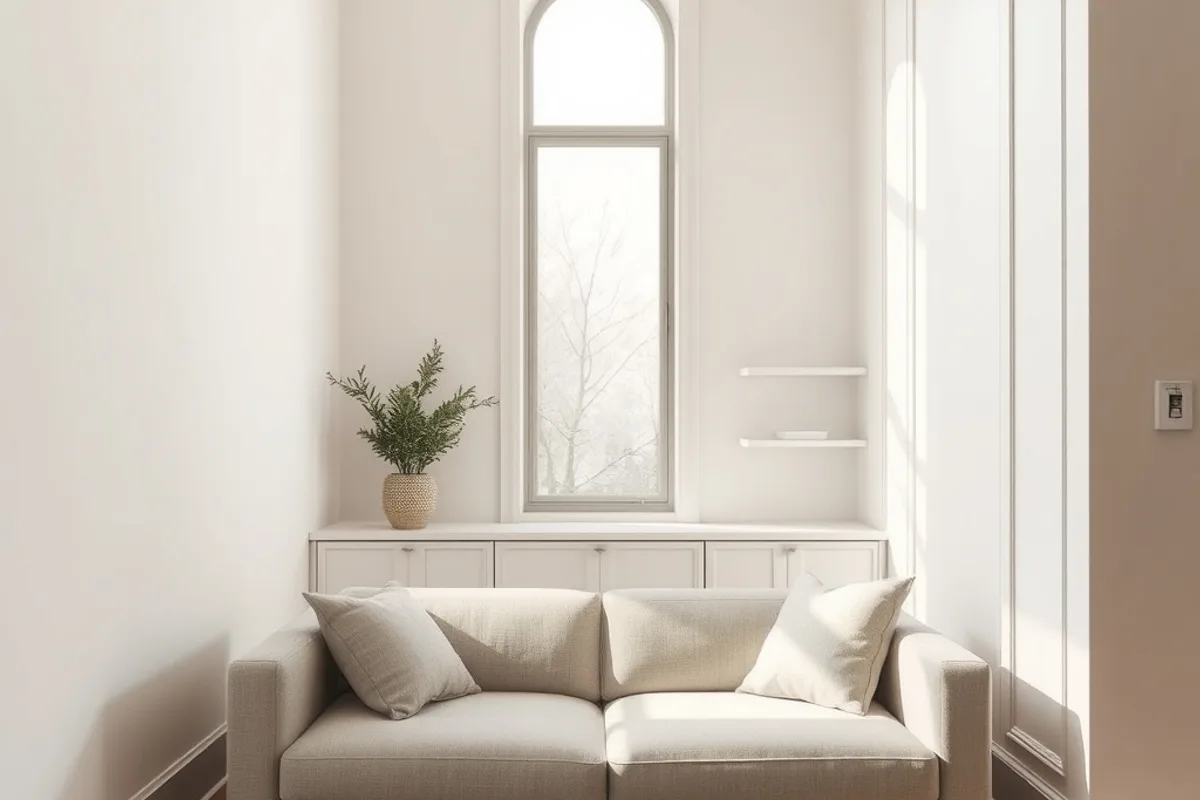
If you want a lighter room, use a warm off-white rather than a cool brilliant white. Cool whites can look grey in north-facing light and make the space feel clinical. Test the colour on a large sample board in the actual light at different times of day.
Light the surfaces, not the floor
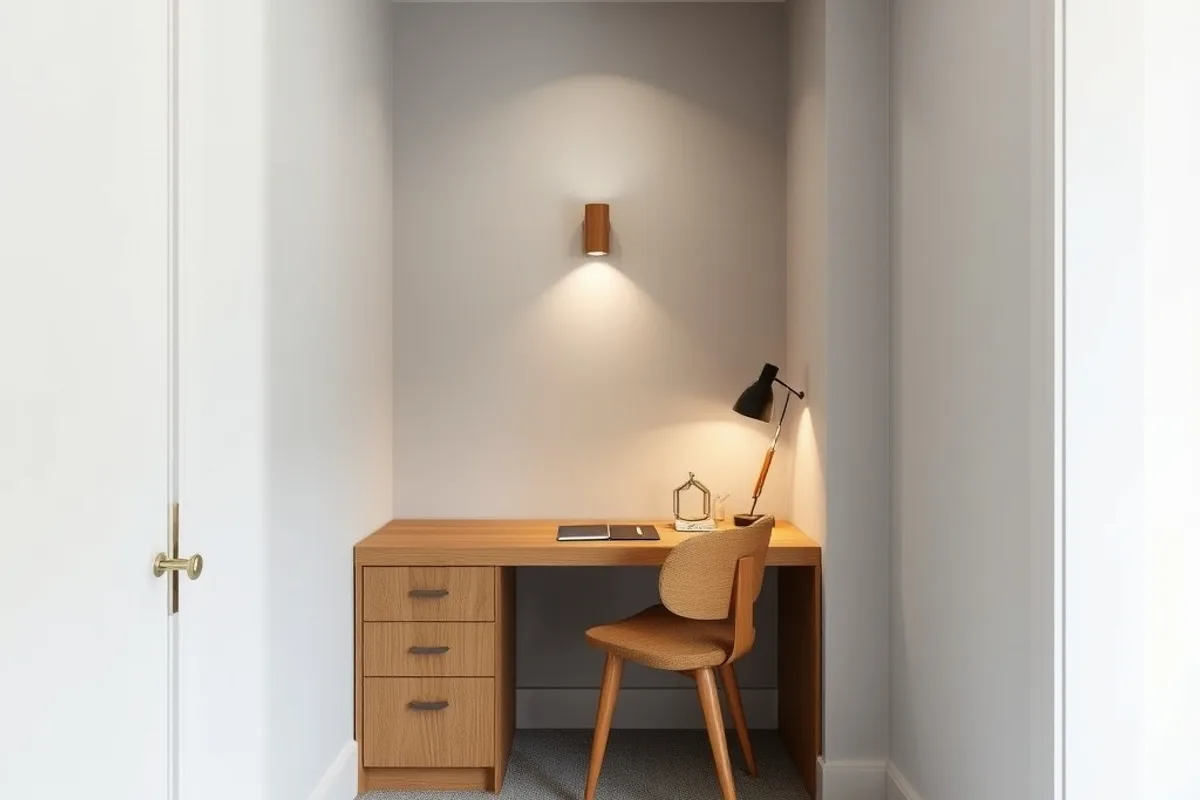
Small rooms are often under-lit by a single central fixture. The result is bright patches and dark corners, which makes the room feel smaller. Layer the light: a ceiling fixture for general illumination, wall lights or picture lights to wash vertical surfaces, and a task light where you read or work.
Uplighting and wall washing are particularly effective. Light bouncing off a pale ceiling or a textured wall expands the perceived volume. A floor lamp aimed at the ceiling can do more for a small room than a larger window.
Mirrors are useful, but only when they reflect something worth seeing: a window, a garden, a piece of art. A mirror facing a blank wall or a cluttered corner just duplicates the problem.
Edit the edges
The edges of a small room carry a disproportionate amount of visual weight. Skirting, cornice, door frames, curtain headings and radiators all compete. Simplify where you can: a plain skirting, a curtain that runs from ceiling to floor, a radiator moved or replaced with underfloor heating.
Curtains should be wide enough to stack clear of the glass when open. A narrow curtain that covers half the window makes the room feel smaller and the light dimmer. Hang the rail close to the ceiling and extend it beyond the window recess.
Doors matter too. A door that opens into a small room consumes a quarter of the usable floor. A sliding door, a pocket door or a door that opens outward can transform the layout. If changing the door is not possible, at least ensure it can open fully without hitting furniture.
The test of a good small room
Stand in the doorway and look in. Can you see the window? Is the floor mostly clear? Does the eye rest on one calm surface rather than five competing ones? Can you move through the room without turning sideways? If the answer is yes, the room is working, regardless of its floor area.
Small rooms reward restraint. Every object should earn its place, every surface should have a purpose, and every decision should support the same idea. Do that, and the room will feel not like a compromise, but like a deliberate piece of design.